On Monday, August 10, at 7:34am local time, a Mw 7.4 earthquake struck Colombia's coffee region. My family called me while the ground was still moving. It was the largest earthquake in my home country since 1999—and, oddly, it hit the same region.
Everyone in my family was safe. But the damage reports started coming in within the hour, and it was clear that several of the buildings we are connected to had been hit. I packed a bag and flew to Colombia the next day.
I was nine years old in 1999, having lunch with my parents in a one-story house in Ibagué, my hometown. Ibagué was shaken, but it was not hit anywhere near as hard as Armenia. Still, the ground moved for the first time in my life, we ran straight out of the building. I have come back to that afternoon over and over in my career—it is the reason I became a structural engineer and the reason natural hazards have held most of my professional life.
Armenia was a different story. More than a thousand people passed away there in that event. Much of the city's built infrastructure was severely damaged, and a significant share of its buildings collapsed.
Twenty-seven years later, the same area was shaking again. This time the earthquake rupture was deeper, but the energy released (measured by the magnitude) was much larger. Armenia—the city hit hardest in 1999—was again among the three major cities with the highest ground shaking.
Four and a half days, about forty buildings
The first thing we did was check the buildings connected to my family. The findings there were good news given the circumstances: non-structural damage only, and in most cases nothing that impaired habitability.
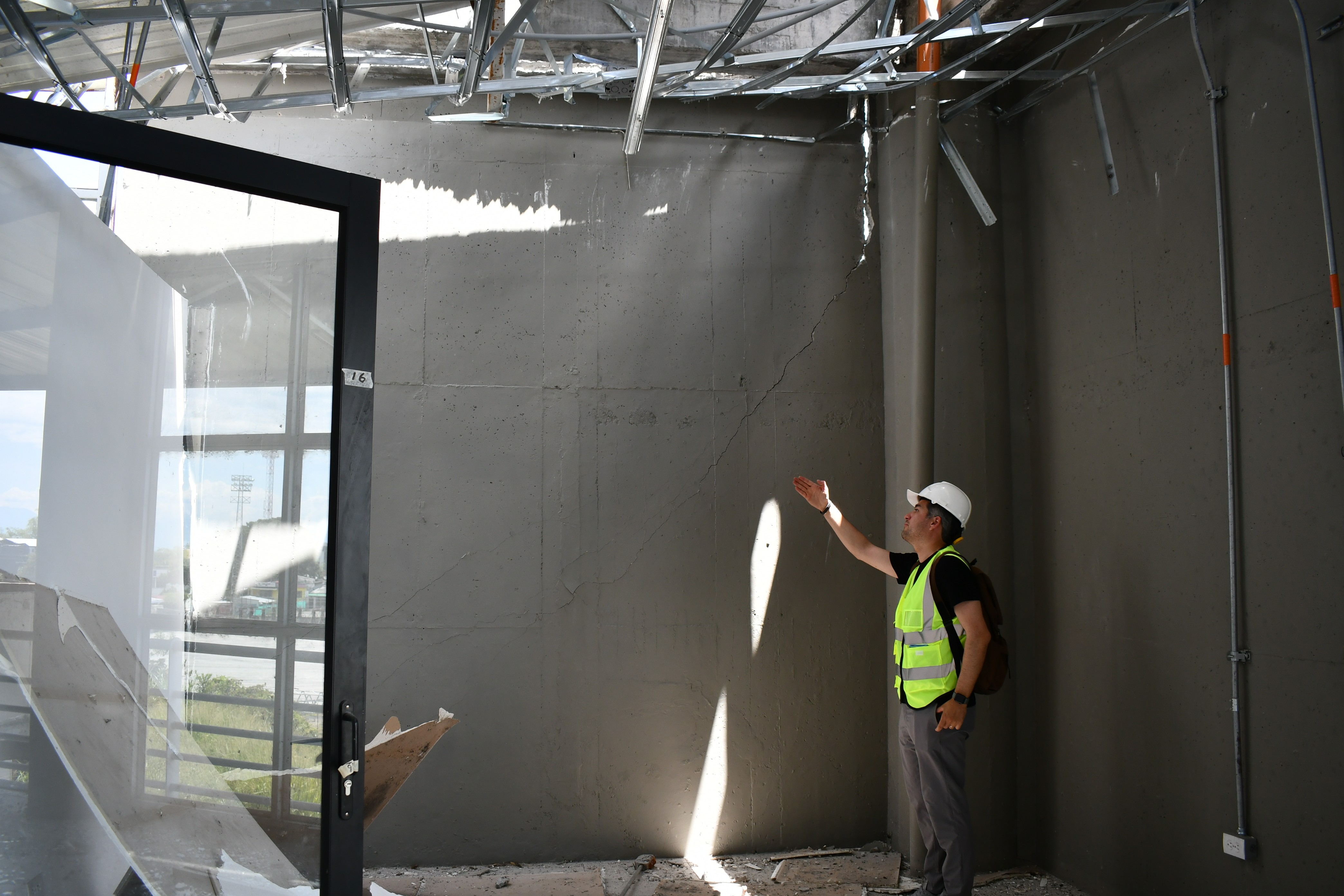
That was plainly not everyone's outcome. So we turned the same work outward. We volunteered with Armenia's Secretaría de Infraestructura and asked them to send us the cases where they had the most doubt and the most exposure. For four and a half days we worked dawn to dusk and inspected roughly forty buildings—single-family homes, apartment buildings, churches, the prosecutor's office, the mayor's office, and large educational facilities that are now operating for the community under restricted access. For each one we issued a recommendation on occupancy and on the repairs needed to restore it.
What a structural engineer is actually for in the first 72 hours
This is the part I did not fully appreciate until I was standing in it.
To anyone who is not an engineer, every crack that exposes the structure underneath looks like a verdict on whether the building will stand. And the question behind it is personal, for instance: can my kids sleep here tonight? Often the family has nowhere else to go. The city is scrambling, and the usual shelters—schools—were damaged too.
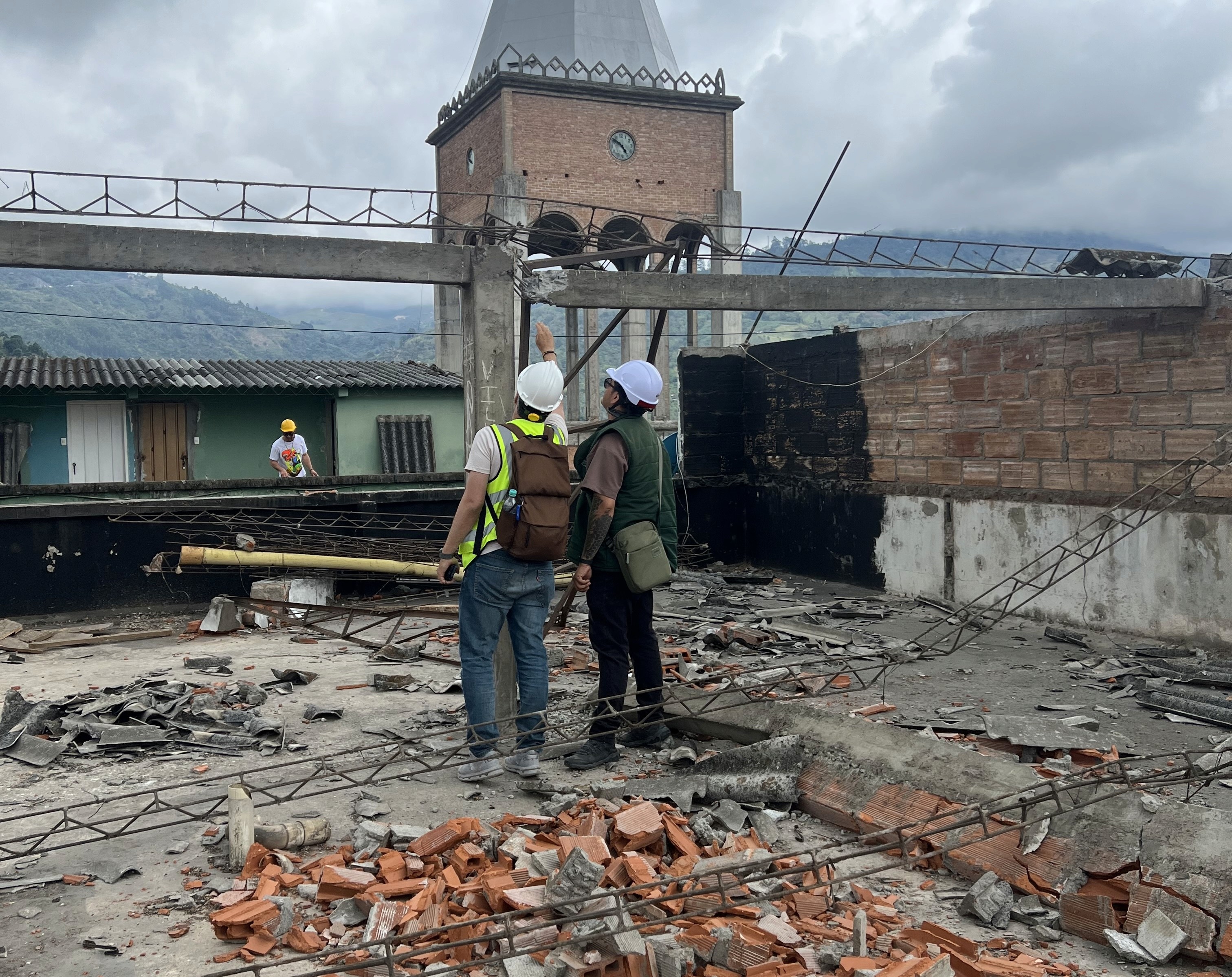
Reading those cracks correctly, and making a judgment on which ones matter and which ones don't, is the single most valuable thing an engineer can do in the first days after an earthquake.
The good news is real
The contrast with 1999 is unmistakable. This time, in the city of Armenia, there were no reported casualties. There were partial collapses and a few total collapses of relatively small buildings, and the long duration of the shaking gave people time to get out. Set that against more than a thousand deaths in the same city in 1999, and the improvement in how we design and build is not a matter of opinion.
Modern codes, enforced, save lives.
However, not everything is good news
A large number of buildings with no visible damage to the structure itself are nonetheless unsafe to occupy mostly because of falling hazards from non-structural elements. Unreinforced masonry partition walls. Ceiling tiles. Roof members left loose and precariously holding on after the shaking. The frame did its job. The building still cannot be used.
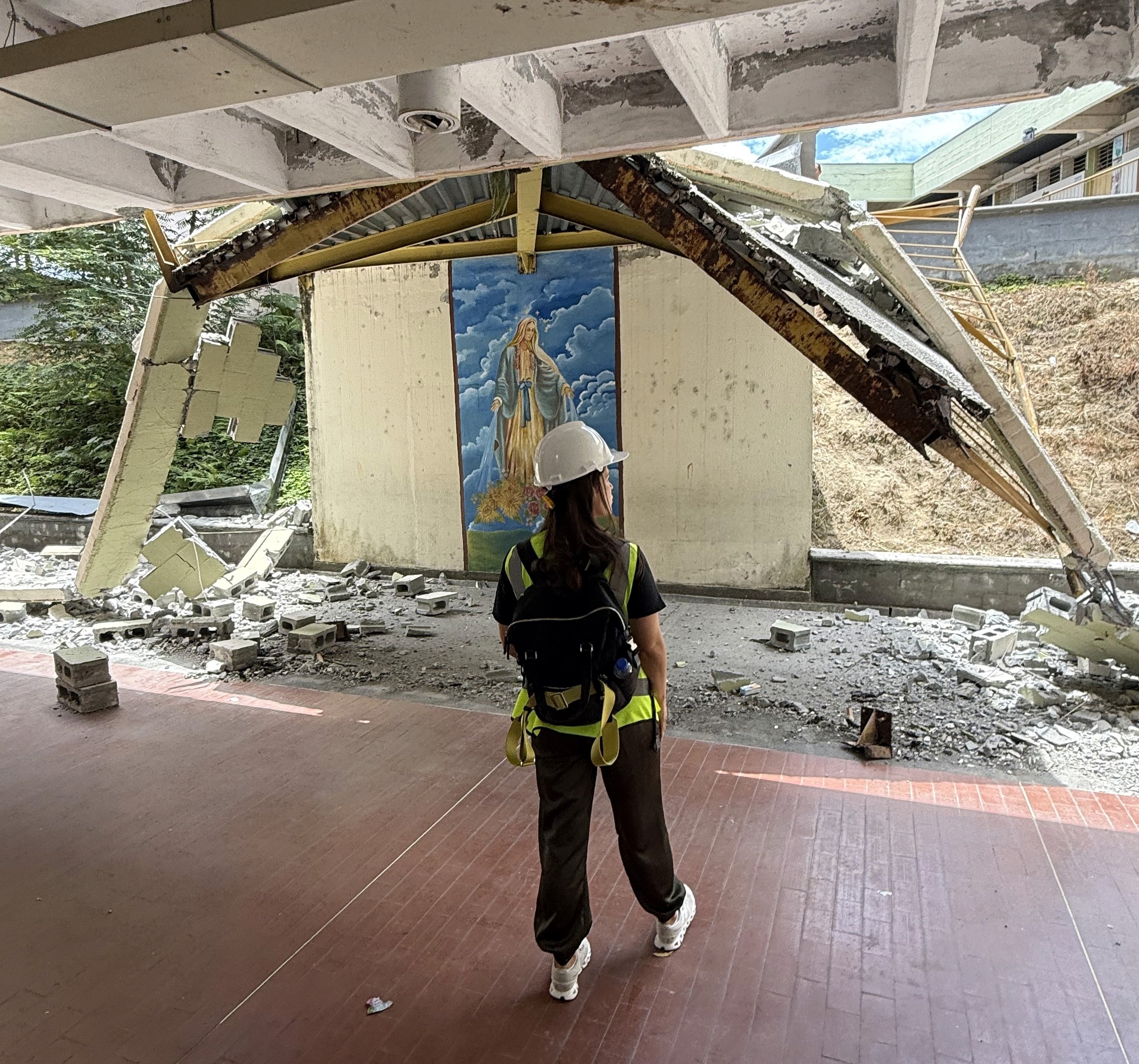
That creates a second disaster that arrives more slowly than the first. Repairing it all requires structural engineers to assess and direct the work, and construction crews to do it—and there are far fewer of both than there are damaged buildings. Meanwhile the families have to live somewhere, and somebody has to pay. Insurance penetration in Colombia is better than in many comparable places, but a large share of this damage is simply uninsured. Those repairs will come out of household savings, or they will not happen at all.
What we are doing with what we learned
We are just scratching the surface of what we can learn from this event, and the most useful ones will not come from four days of walking buildings—they will come from the data. We are working with Universidad de los Andes and international research collaborators to study this earthquake systematically: what shook, what performed, what failed, and why.
The point is to turn it into three concrete things:
Better building codes — particularly for the non-structural systems that are now the dominant source of loss and downtime.
Better local emergency-response policy — faster, more consistent post-event assessment, and shelter planning that does not depend on buildings that are themselves at risk.
Better underwriting — a sharper, evidence-based understanding of what actually drives damage in this region, and in every hazard-exposed region like it.
Why this relates to what we are building at ResiQuant
Insurance is the only industry that puts a price on risk. That gives it a power nothing else in the built environment has: if the price is right, it changes what gets built.
Today the price has a lot of uncertainty. The engineering facts about a building—how it was built, how its walls and ceilings are attached, what was retrofitted and what wasn't—are almost never known at the moment the risk is priced. So they cannot be rewarded. Retrofitting a building, or constructing a better one in the first place, produces no predictable reduction in premium in the vast majority of the cases. Which means, financially, there is no incentive to prevent a catastrophe like this one.
That is the reality we are working to change, and it starts at the foundation: remove the uncertainty about building facts, so that a policy reflects the real engineering risk of the real structure. When that information is present at underwriting, pricing can reflect actual risk. When pricing reflects actual risk, a discount for reducing that risk becomes possible. And that is the flywheel—the one that ends with a built environment that is not just survivable, but resilient.
I would rather bring structural engineering expertise to a building the year before an earthquake than the week after. That is the whole idea.